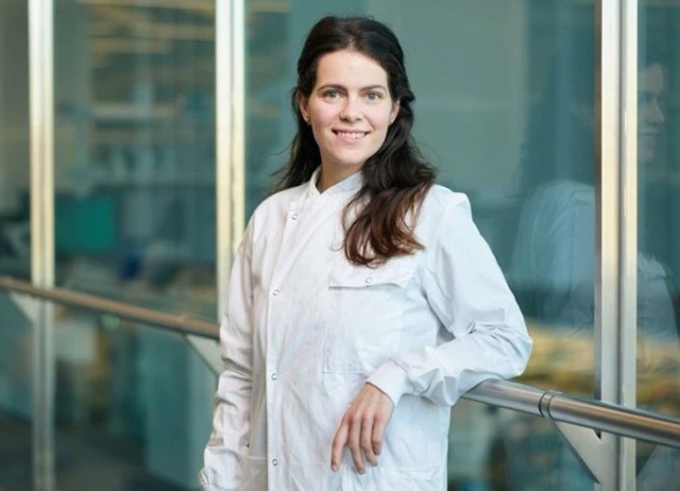
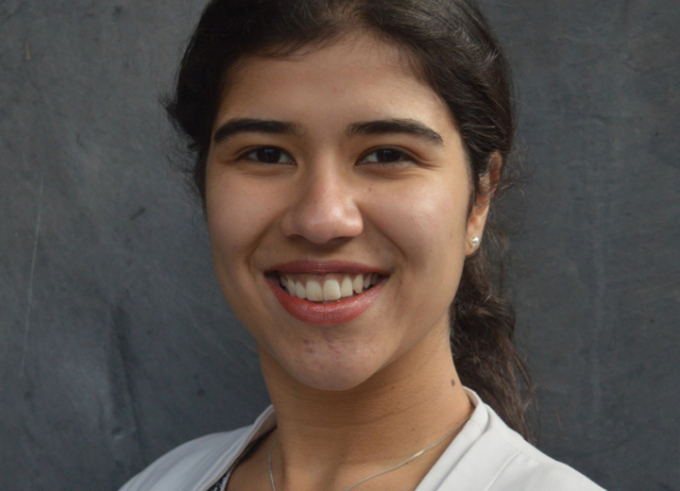
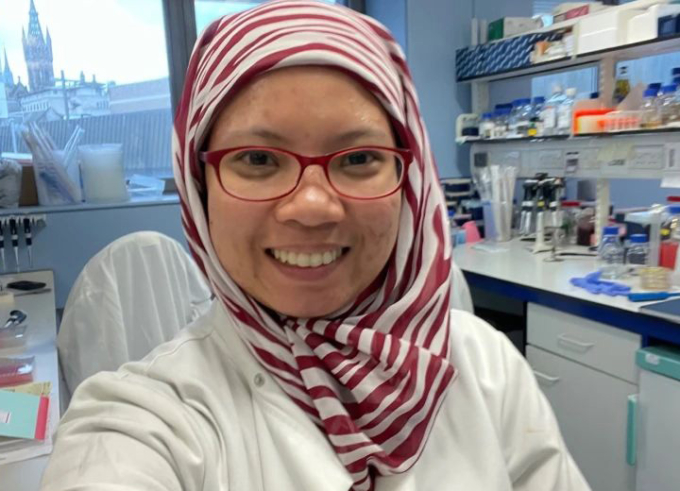
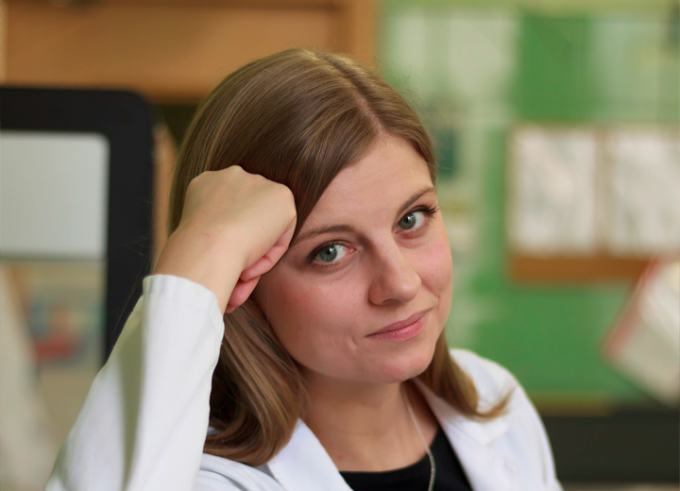
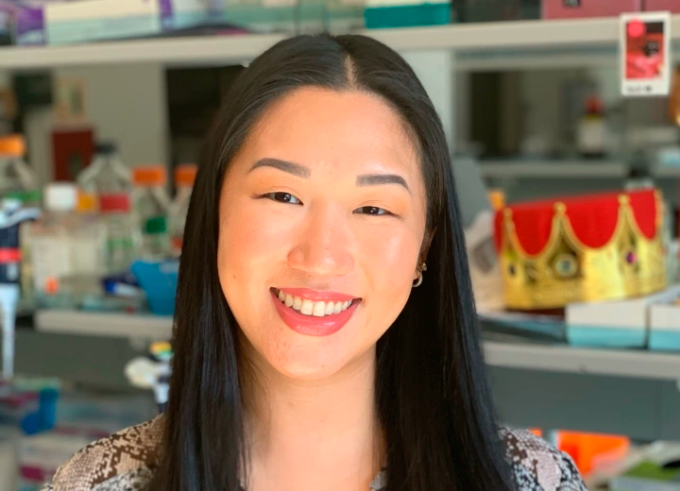
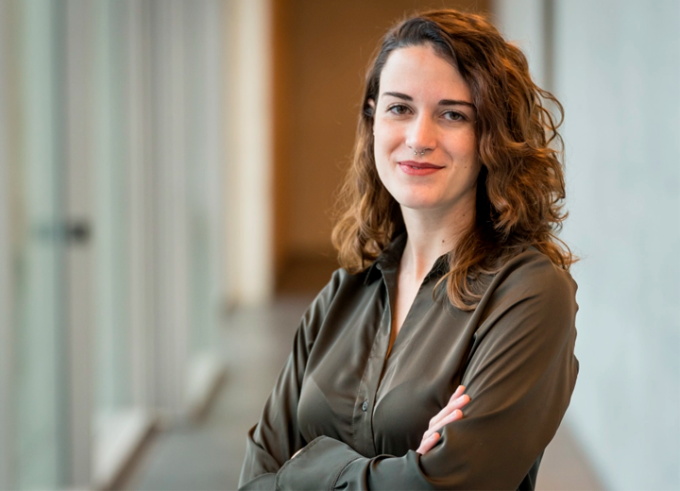
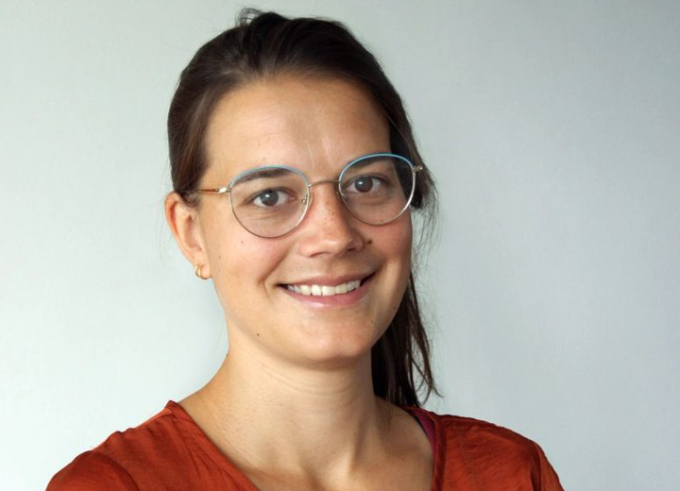
Alicia, Lindau Alumnua 2023, from Spain is a Marie Skłodowska-Curie Postdoctoral Fellow at Université de Caen in France. Her research focuses on cancer genomics and the molecular basis of marine contagious metastasis.
Trishla Sinha, PhD student at the University Medical Center Groningen, aims to identify factors that shape the maternal and infant gut microbiomes and viromes, focusing on birth and environmental factors.
Liyana is a lecturer at University Sains Islam Malaysia. Her research focuses primarily on antimicrobial resistance (AMR) through understanding protein structure and functions.
Magdalena from Poland is a Postdoc at Jagiellonian University, Krakow, Poland. She studies the evolution of the vertebrate immune system, focusing on the major histocompatibility complex (MHC) – a set of molecules central to molecular self/non-self recognition and the adaptive immune response.
Women in Research #LINO23: Mirian Krystel De Siqueira
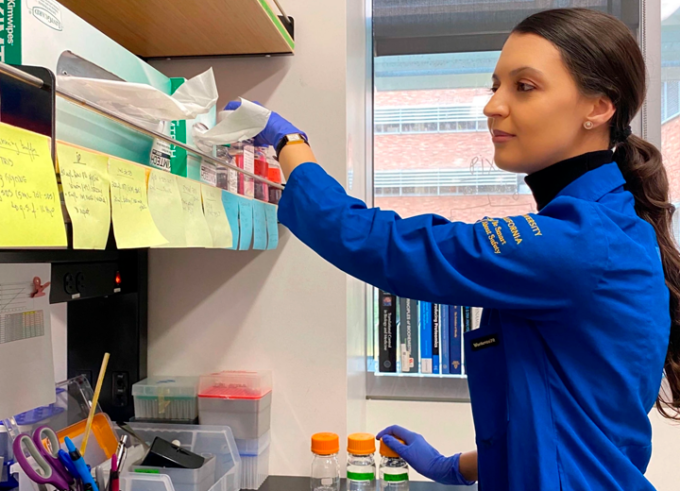
Mirian from Brazil is a Ph.D. Candidate at the University of California, Los Angeles, CA, USA. Her current research interests rely on understanding the landscape of translation regulation in the development of obesity and systemic metabolism.
Scientific Nobility With Journey to Excellence: Amreen Khan #LINO23
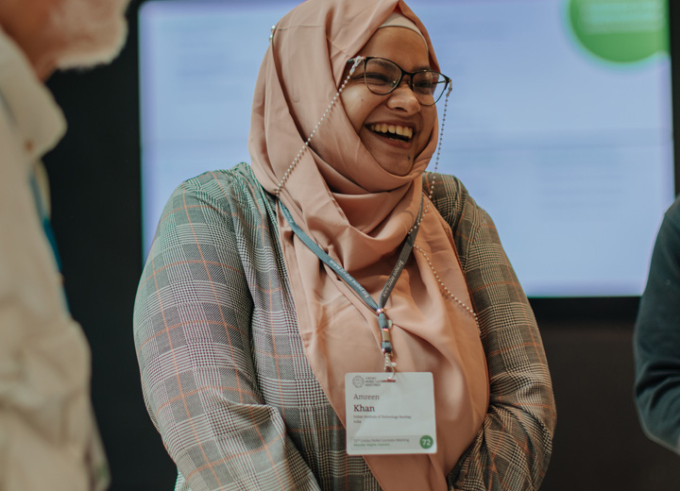
Amreen Khan, a biomedical researcher at the Indian Institute of Technology in Bombay and #LINO23 participant,,is working on innovative materials to improve cancer treatment and wound healing. Learn more about her career and her #LINO23 experiences.
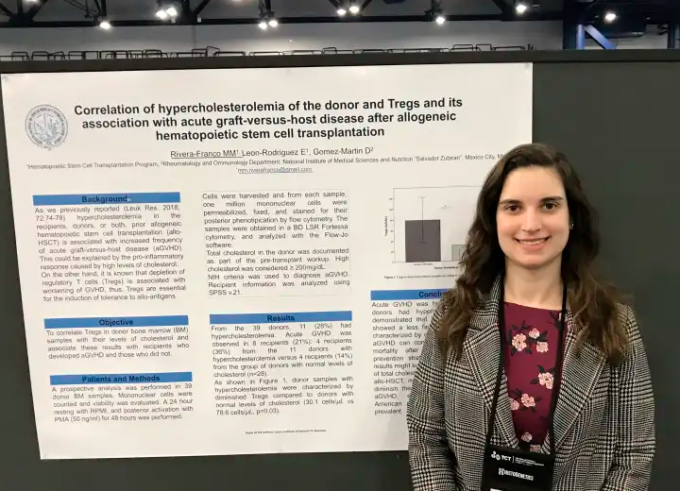
Mónica from Mexico is a Medical Researcher at Eurocord Paris, France. Her research focuses on epidemiological and translational research in the fields of human leukocyte antigens, cord blood transplantation, and cellular therapies for benign and malignant hematological diseases.
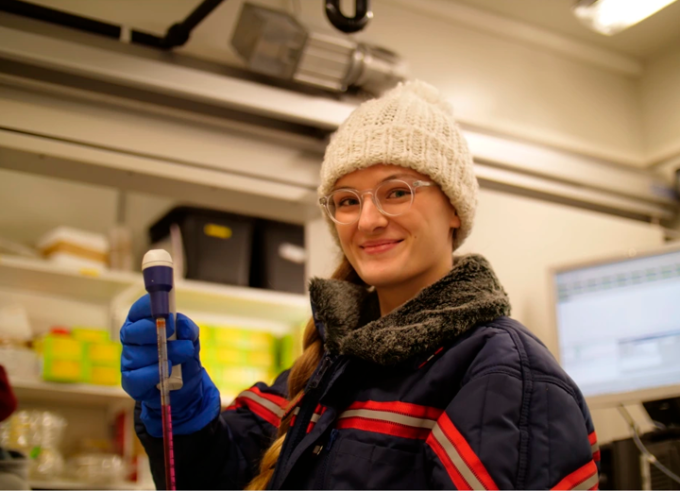
Zuzanna from Poland is a Ph.D. graduate at the Friedrich Miescher Institute in Biomedical Research, Basel, Switzerland. Her research focuses on molecular glue degraders, a new paradigm in drug discovery that allows targeted destruction of disease-causing proteins.
Lianna from Canada is a postdoctoral researcher at Stanford University, CA, USA. She leverages the study of male-female differences to discover novel metabolic hormones and genes that control how women and men regulate their metabolism differently.
Women in Research #LINO23: Mari Carmen Romero-Mulero
Mari Carmen from Spain is a Ph.D. student at the Max Planck Institute of Immunobiology and Epigenetics and the Faculty of Biology, University of Freiburg, Germany. Her project focuses on the assessment of the effect of aging on the physiology of the hematopoietic compartment.
Developing brains are designed to learn from the environment and research shows just how adept kids are at extracting knowledge from the world around them. Are our educational systems the best way to support this development?
Sanne Boersma hopes to contribute to solving some of the mysteries of our cells and our tissues. Currently, she is very much fascinated by the complicated ‘tug-of-war’ between a virus and the infected tissue during infection.